1. The Maritime Inversion Behind the Global Silicon Shield
A common misconception in corporate risk committees is that Taiwan's semiconductor ecosystem (led by TSMC's >90% share of sub-5nm advanced logic, UMC's mature automotive/grid nodes, and ASE/SPIL's outsourced semiconductor assembly and test facilities across Hsinchu, Taichung, Tainan, and Kaohsiung) is largely insulated from ocean shipping disruptions because finished silicon chips (HS 8542.31) travel by widebody air freight out of Taoyuan International Airport (TPE).
Look at the inbound physical bill of materials required to keep a modern extreme ultraviolet (EUV) lithography fab operating 24 hours a day, and that assumption flips upside down. Taiwan imports more than 96% of its primary energy, and seaborne Liquefied Natural Gas (HS 2711.11) generates 43% to 50% of the island's electricity. Every single day, Taiwan burns roughly 56,164 tonnes of imported LNG (20.5 million tonnes per year), delivered via cryogenic 174,000-cubic-meter LNG carriers arriving at Yong'an (Kaohsiung) and Taichung on the western Taiwan Strait coast roughly once every 30 hours. Moving that single daily fuel mass by Boeing 747-8F cargo aircraft (135 tonnes payload) would require 416 widebody freighters landing every single day, a physical impossibility.
Semiconductor cleanrooms cannot ride out rolling grid blackouts. Even a 50-millisecond voltage sag trips EUV laser optics, scrambles tens of thousands of in-process wafers across hundred-step photolithography tracks, and forces multi-week cleanroom recalibration. Without uninterrupted maritime LNG and bulk wet-chemical deliveries into west-coast ports, Taiwan's fabs shut down rapidly even if airspace above Taoyuan technically remains open.
"Chips fly out of Taoyuan by air, yet Taiwan's semiconductor fabs require 56,164 tonnes of seaborne LNG every day (equivalent to 416 Boeing 747-8F freighters) and hold just 8 to 11 days of statutory gas storage."
Energy Solutions Intelligence, Taiwan Maritime Fab Lifeline Model (SC-309, Nov 2026)
2. The Fab Survival Clock: LNG, EUV Photoresists & Specialty Acid ISO Tanks
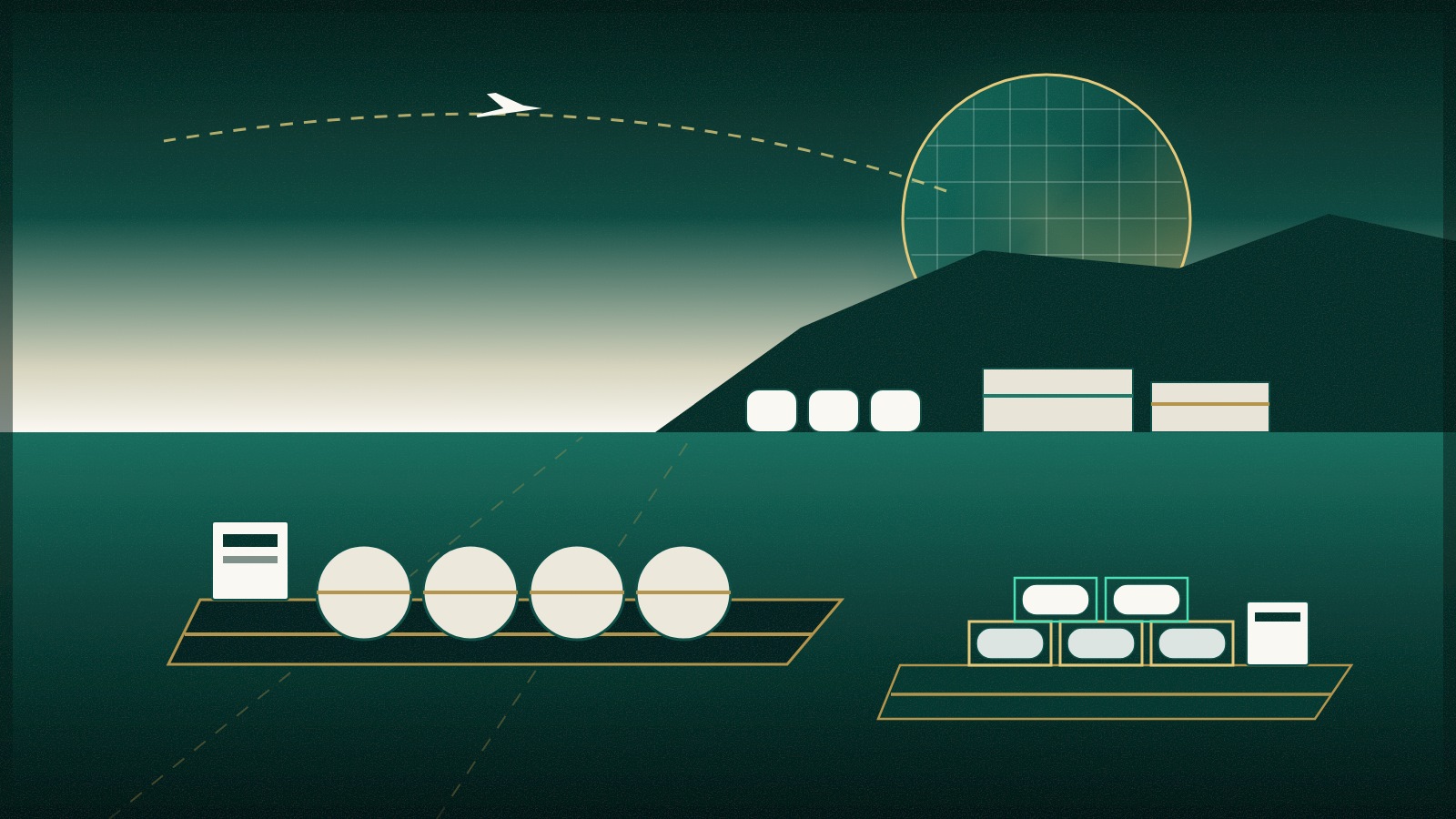
Table 1 and Figure 1 map the sequential exhaustion timeline of every critical maritime input feeding Taiwan's semiconductor cluster under an acute maritime interdiction or commercial insurance freeze.
| Inbound Fab Lifeline | Primary Transport Mode | On-Island Buffer | Strategic Concentration | Port / Hub Entry | Operational Failure Mode |
|---|---|---|---|---|---|
LNG Grid Fuel (HS 2711.11) |
174k m3 LNG Carriers | 8 - 11 days | 43% - 50% of Taiwan grid | Yong'an & Taichung (West) | 56,164 t/day sea-only; trips 24/7 EUV cleanroom power first |
EUV Photoresists & Slurries (HS 3707.90) |
Reefer sea & specialty air | 14 - 21 days | >80% Japan (JSR, TOK, Shin-Etsu) | Keelung / Taoyuan TPE | 3-to-6 month cold-chain shelf life prevents deep stockpiling |
| Electronic HF, H2O2 & NF3/WF6 Gases | Hazmat ISO Tank Containers | 21 - 30 days | Japan, South Korea & Global | Kaohsiung & Taipei Port | Toxic Class 8/2.3 bulk ISO tanks banned on commercial airfreight |
| 300mm Bare Silicon Wafers & Spares | Airfreight + Container | 30 - 45 days | SUMCO, Shin-Etsu, ASML, TEL | Taoyuan TPE / Kaohsiung | Airspace / war-risk freeze blocks EUV source & spare replacements |
| Thermal Coal & Crude Oil | Capesize Bulk / VLCC | 35 - 100 days | ~35%-40% grid (coal) | Taichung / Kaohsiung | Coal baseload cannot replace fast-ramping gas voltage regulation |
Source: ESI Taiwan Maritime Lifeline Audit (SC-309, Nov 2026), compiled from Taiwan Ministry of Economic Affairs (MOEA) statutory LNG reserve disclosures and semiconductor chemical cold-chain norms.
Why Photoresists and Acid ISO Tanks Cannot Simply Be Hoarded: Corporate planners often ask why foundries do not simply build 180-day chemical bunkers beside every fab. The barrier is physical chemistry. Cutting-edge extreme ultraviolet (EUV) and ArF immersion photoresists supplied predominantly by Japan (JSR, Tokyo Ohka Kogyo, Shin-Etsu) degrade chemically after 3 to 6 months even under strict sub-zero refrigeration. Meanwhile, hundreds of tonnes of parts-per-trillion electronic-grade hydrofluoric acid (HF), hydrogen peroxide, and etching gases (NF3, WF6) ship exclusively in specialized fluoropolymer-lined marine ISO tanks via Kaohsiung and Keelung because aviation dangerous-goods regulations ban bulk corrosive toxic liquids from passenger and commercial freighter holds.
3. The "Insurance Blockade": How a Non-Kinetic Quarantine Freezes Shipping
Defense analysts increasingly distinguish between a full-scale military invasion and a gray-zone maritime quarantine (declared under domestic customs-inspection or live-fire drill notices around Kaohsiung, Taichung, and Yong'an). For commercial energy and semiconductor supply chains, the practical outcome is almost identical. Under standard Institute War and Strikes Clauses issued by the London Joint War Committee (JWC), underwriters retain 7-day (or 48-hour emergency) cancellation rights when an active exclusion or inspection zone is declared. The instant commercial P&I and hull war-risk policies lapse, global LNG shipowners, container alliances, and Japanese chemical-tanker operators legally refuse to call Taiwanese ports without firing a single torpedo.
That insurance trigger also highlights why Taiwan's geography resists easy domestic workarounds. Taiwan's rugged Central Mountain Range rises steeply along the eastern Pacific shoreline, leaving limited deepwater port infrastructure (Hualien and Su'ao) and constrained cross-island rail/pipeline capacity. Nearly 90% of the island's container gantries, LNG regasification berths, and industrial power plants sit on the flat western plains directly facing the Taiwan Strait.
CPC Corporation Taiwan and Taipower are investing billions to expand onshore cryogenic tankage (including the Guantang Third LNG Receiving Terminal in Taoyuan and additional tanks at Taichung and Yong'an), targeting an increase in statutory LNG reserve days from 11 days toward 14 days by 2027 to 2028. While adding three days of storage cushions against typhoons that close western berths for 72 to 96 hours, every newly built receiving jetty still faces the Taiwan Strait directly, meaning even 14 days of tankage buys barely two weeks of grid survival under a sustained maritime quarantine.
4. Global Container Fleet Exposure (48% / 88%) & The East-of-Taiwan Detour
Even if a Taiwan Strait crisis spares physical fabs and stays limited to recurring naval-drill exclusion boxes, it immediately disrupts the world's busiest container highway. Maritime traffic telemetry confirms that roughly 48% of the global container fleet and 88% of the world's largest mega-container ships transit the Taiwan Strait annually moving goods between Shanghai, Ningbo, Busan, Tokyo, Southeast Asia, and Europe. Table 2 and Figure 2 contrast the manageable detour cost for non-Taiwanese through-traffic against the systemic catastrophe of an island port freeze.
| Disruption Tier | Operational Mechanism | Non-Taiwan Through-Traffic Impact | Taiwan Fab & Grid Impact | Macro / Energy Supply-Chain Fallout |
|---|---|---|---|---|
| Tier 1: Periodic Naval Drills (3-5 days) | Temporary live-fire exclusion zones inside Strait | +380 nm East-of-Taiwan detour (+1.0d / +$178k per ULCV) | LNG arrivals shifted 24-48h; fabs operate normally | Minor spot rate & war-risk blip; routine marine rerouting |
| Tier 2: Commercial Quarantine (14-30 days) | Mandatory customs boarding; JWC cancels commercial war cover | All mega-ships permanently route east of Luzon/Taiwan | LNG hits 8-11d cliff; photoresists fail days 14-21 | Global AI server, grid-relay MCU & power-IC shipments freeze |
| Tier 3: Prolonged Blockade (90+ days) | Full sea & airspace denial around island | Severe regional war-risk spike across East China Sea | Total advanced foundry & OSAT packaging shutdown | $2.5T - $5.0T U.S./global GDP shock (SIA / think-tank estimates) |
Source: ESI Synthesis of Maritime Traffic Telemetry, Semiconductor Industry Association (SIA), and Taiwan MOEA Energy Balance Data (2025-2026).
5. Energy & Power-Electronics Procurement Contingency Playbook
Energy utilities and grid-equipment OEMs often assume Taiwan risk belongs exclusively to Nvidia or Apple. That blind spot is dangerous. High-voltage substation protection relays, inverter gate-driver ICs, BESS battery-management microcontrollers, and industrial power-management chips rely heavily on Taiwanese mature-node foundries (UMC, Vanguard, Powerchip) and OSAT packaging houses (ASE, SPIL) that share the exact same 11-day LNG grid lifeline.
Even when a power-semiconductor OEM fabricates silicon-carbide or IGBT wafers in Germany, Japan, or the United States (under U.S. CHIPS Act or EU Chips Act grants), billions of dies still fly to Taiwan for bump-bonding, testing, and OSAT packaging before final shipment. True chokepoint resilience requires verifying both front-end wafer fab AND back-end OSAT packaging qualification outside the Taiwan Strait (Malaysia, Philippines, Europe, Mexico, or Japan) alongside 180-day die-bank safety inventory for critical substation relay microcontrollers.
Model Semiconductor & Critical-Component Buffer Costs
Benchmark how holding 180-day strategic IC die banks and multi-region sourcing protects project bankability using the Energy Solutions Intelligence Project Finance Model.
6. Methodology & Open Reproducible Dataset
All daily LNG import mass calculations (20.5M t/yr / 365 = 56,164.4 t/day), Boeing 747-8F air-freight equivalence (56,164.4 / 135 = 416 flights/day), and East-of-Taiwan ULCV detour estimates (+380 nm / +1.0 day = +$178k/voyage) were verified in fixed-precision Python Decimal arithmetic. Global fleet shares (48% container fleet, 88% largest ships), Taiwan energy import shares (>96%, 43%-50% LNG electricity, 8-11 day statutory storage), and macroeconomic GDP impact bands ($2.5T-$5.0T) synthesize maritime AIS telemetry, Taiwan MOEA energy balances, and SIA/policy think-tank assessments through 2026.
Download the structured CSV dataset detailing all five fab maritime lifelines, on-island survival buffers, and Strait escalation tiers:
Download Reproducible CSV Dataset (SC-309)7. Primary Maritime, Energy & Semiconductor Sources
- Taiwan Ministry of Economic Affairs (MOEA) / Energy Administration, Annual Energy Balance & Statutory LNG Safety Reserve Disclosures (11-Day Storage Baseline). moeaea.gov.tw
- Semiconductor Industry Association (SIA) & Hinrich Foundation, Taiwan Semiconductor Supply Chain Concentration & Global Economic Impact Assessments. semiconductors.org
- Center for Strategic and International Studies (CSIS) & Foundation for Defense of Democracies (FDD), Maritime Quarantine vs. Blockade Scenarios & Taiwan Energy Infrastructure Vulnerability. csis.org
- Bloomberg / Maritime AIS Fleet Analytics, Taiwan Strait Container Fleet Transit Share (48% Global Fleet / 88% Largest Mega-Ships). unctad.org
- Lloyd's Market Association Joint War Committee (JWC), Institute War and Strikes Clauses: Exclusion Zone & 7-Day Cancellation Mechanics. lmalloyds.com
Related Supply-Chain Intelligence
8. Executive Buyer & Analyst FAQ
If advanced semiconductors ship out of Taiwan by air freight, why is maritime chokepoint risk so lethal?
While finished GPUs and packaged wafers fly out of Taoyuan International Airport (TPE), Taiwan's semiconductor fabs depend entirely on seaborne ships for power and bulk process chemicals. Taiwan imports over 96% of its energy and runs 43% to 50% of its electricity on seaborne LNG (56,164 tonnes/day, equivalent to 416 Boeing 747-8F freighters per day), holding just 8 to 11 days of statutory LNG storage.
How can a non-kinetic maritime quarantine halt Taiwan's fabs without firing a shot?
If maritime authorities declare a customs inspection or quarantine zone around Taiwan's ports (Kaohsiung, Taichung, Keelung, Yong'an), London P&I clubs and hull war-risk underwriters automatically cancel commercial coverage. Uninsured LNG carriers and chemical ISO-tank vessels stop calling immediately, exhausting on-island LNG inside 11 days and refrigerated EUV photoresists inside 14 to 21 days.
What share of global container ships transit the Taiwan Strait?
Roughly 48% of the global container ship fleet and 88% of the world's largest ultra-large mega-ships transit the Taiwan Strait annually linking China, South Korea, and Japan to Southeast Asia and Europe. Non-Taiwanese through-traffic can detour east of Taiwan via the Philippine Sea (+380 nm, adding 1.0 day and ~$178k per 20,000-TEU ship), yet Taiwan's own west-coast LNG and industrial ports have no east-coast substitute.
How does a Taiwan Strait disruption hit grid and power-electronics supply chains beyond AI GPUs?
Beyond TSMC's >90% share of sub-5nm AI data-center accelerators, Taiwan anchors global foundry and OSAT packaging (ASE, SPIL, UMC, Vanguard) for automotive and grid microcontrollers, gate-driver ICs, power-management chips, and high-voltage substation relay logic. A 14-day fab halt cascades directly into industrial inverter, BESS BMS, and protective-relay shortages worldwide.